Protect your rights.
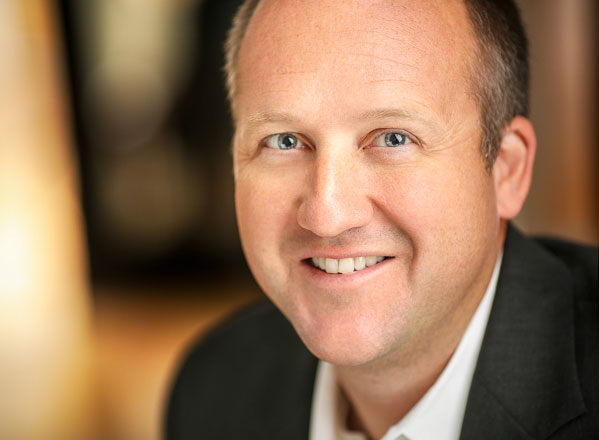
I have been practicing law since 1994, and I have tried many personal injury cases representing both plaintiffs and defendants. I will protect your right if you were injured by the actions of another.
Now, I only represent seriously injured people. My prior experience as a defense attorney allows me to know exactly what insurance company adjusters and defense lawyers are trying to accomplish as they try to minimize or eliminate an injured person's right of a fair recovery.
Over the years, I have handled numerous bicycle and motorcycle accident cases for adults and children with successful results.
Hire an attorney who is also a cyclist.
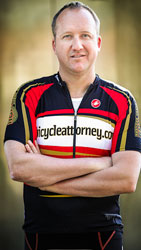
Colorado is the best place to ride a bicycle in my opinion. I have been an avid cyclist for the last 22 years. I ride all over the front range on the roads and trails. In fact, during the week I am frequently riding up Lookout Mountain or on the popular mountain bike trails in Jefferson County.
I've ridden in dozens of charity and group rides including the Triple Bypass. I routinely ride 3,000 or more miles a year on roads, bike paths and trails, and know all too well what it feels like to get run off the road or otherwise harassed by insensitive motorists. Many of my closest friends are cyclists and I have represented them in bicycle accidents throughout Colorado.
Frequently
Asked Questions
Q: How soon after my bicycle accident should I call you?
A: Call me immediately. Do not talk to the other person’s insurance companies until after you have consulted a lawyer. I make a point of returning all calls and e-mails promptly. If you have been injured in a bicycle accident you need to know right away what insurance coverage is in place to cover your medical expenses, scars, road rash, and lost wages.
Q: How do I pay your legal fees?
A: I handle bike accidents and all other personal injury cases on a contingency fee basis. This means YOU DO NOT OWE ME A LEGAL FEE UNLESS I RECOVER MONEY FOR YOU. I do not ask for any attorney fees upfront. If there is no recovery there is no fee.
Q: Can I recover even if the motorist never hit me?
A: Yes. Many people are under the misconception that there has to be physical contact between a cyclist and a motor vehicle for the motorist to be liable. This is not true. There are many situations where cyclists are injured when they take evasive action to avoid being hit, and crash as a result. The motorist can still be held liable if their negligence required the cyclist to take the evasive action.
Q: Can I recover if the other driver had no insurance?
A: Yes, if you have uninsured motorist coverage, you can recover money for your medical bills and pain and suffering even if the other driver had no insurance.
Q: Does my auto insurance cover accidents when I am on my bike?
A: Most auto policies in Colorado will cover you if you are injured in a bicycle accident or while on foot. You may also have medical payments coverage available to you under your policy. Contact me and I can explain insurance coverage to you.
Q: How do I know if I have a good bicycle accident injury claim?
A: You need to contact me and we can discuss your case. My initial consultation on a personal injury case is always free.
Q: What about if I'm attacked or harassed by a dog while riding?
A: Many Colorado municipalities have "leash laws" which require dogs to remain on leashes or within their own yards. If a dog enters the roadway or a bike path, you may be able to recover if a violation of the leash law has occurred. This is true even if a dog does not make contact with your bicycle. Further, if the dog owner knew or should have known that his dog routinely or previously left its yard or the owners control and ran in front of your bike the roadway then you also may be able to make a recovery. Call me to discuss the specific facts and circumstances of your case.
Q: Should I accept the offer that the car insurance company has given me?
A: Very frequently, I can get insurance companies to substantially increase the amount of their settlement offer. If you have already received an offer for your injuries, contact me and I will let you know what I think about their offer free of charge.
Q: How long does it take to settle most bicycle accident and personal injury cases?
A: It depends on the circumstances. I have handled some cases which settled in a matter of days for the an amount my client wanted. These cases typically involved property damage only. Most cases settle anywhere from 3 - 9 months after the incident. However, a resolution may take longer, particularly when a lawsuit must be filed.
Q: Will pursuing my case take up a lot of my time?
A: No. While each case is different, I will often only meet with clients for the initial interview and then we may communicate over the phone, by email or by mail correspondence. If we do have to go to court, it will take more time. I realize your time is important, so I don’t waste it. However, you will always be kept fully advised (by phone, letter or e-mail) of any significant development in your case. Of course, if you want to discuss any aspect of your case in detail, we can always schedule a meeting.
Q: Will I have to go to trial?
A: The majority of bicycle collision and personal injury cases don’t go to trial. However, I treat each case from the very start as if it is going to be a trial, because you have to be willing to go to trial (and so does your attorney) to maximize your settlement.
Q: Why is it so important to hire an experienced Colorado trial attorney?
A: Most bicycle injury accidents and personal injury cases settle before trial, but you want to maximize your settlement value. I am a successful trial attorney with courtroom experience who is not afraid to take your case to trial. I will not advise you to settle for less than your case is worth.
Q: Do I need an Colorado lawyer?
A: In order to settle your bike accident case you will have to deal with insurance companies. Their goal is to pay you as little as you will take. It is tough for someone who is not familiar with bicycle accident cases to know what a fair settlement amount is in Colorado which has different laws than other states. An experienced Colorado bicycle accident attorney can help you to determine that amount and reach a fair settlement.
Q: What types of Colorado accident cases do you handle?
A: I handle almost all types of Colorado personal injury and wrongful death cases. In addition, other attorneys in my office handle injuries at work or worker’s compensation matters.
Q: What parts of Colorado do you handle cases in?
A: Most of my work is in the Denver Metro Area, but I have handled cases and had jury trials cases as far west as Steamboat Springs in Routt County, as far south as Cortez in Montezuma County which is also known best for the home of Mesa Verde National Park. Simply put, I am willing to handle a case anywhere in Colorado.
Counties:
Adams, Alamosa, Arapahoe, Archuleta, Baca, Bent, Boulder, Chaffee, Cheyenne, Clear Creek, Conejos, Costilla, Crowley, Custer, Delta, Denver, Dolores, Douglas, Eagle, Elbert, El Paso, Fremont, Garfield, Gilpin, Grand, Gunnison, Hinsdale, Huerfano, Jackson, Jefferson, Kiowa, Kit Carson, Lake, La Plata, Larimer, Las Animas, Lincoln, Logan, Mesa, Mineral, Moffat, Montezuma, Montrose, Morgan, Otero, Ouray, Park, Phillips, Pitkin, Prowers, Pueblo, Rio Blanco, Rio Grande, Routt, Saguache, San Juan, San Miguel, Sedgwick, Summit, Teller, Washington, Weld, Yuma.
Cities:
Arvada, Aurora, Boulder, Colorado Springs, Denver, Englewood, Fort Collins, Golden, Grand Junction, Greeley, Lakewood, Littleton, Longmont, Loveland, Northglenn, Pueblo, Thornton, Westminster, Wheat Ridge.
Colorado
Bike Laws:
Colorado has laws relating to the duty of care of bicyclists when on public roadways. The relevant portions of the statute is listed below. Please understand that bicyclists have the same rights and duties as motorized vehicles. As a result, bicyclists must obey all rules of the road.
The Colorado law for operating bicycles is as follows:
42-4-1412. Operation of bicycles and other human-powered vehicles.
(1) Every person riding a bicycle shall have all of the rights and duties applicable to the driver of any other vehicle under this article, except as to special regulations in this article and except as to those provisions which by their nature can have no application. Said riders shall comply with the rules set forth in this section and section 42-4-221, and, when using streets and highways within incorporated cities and towns, shall be subject to local ordinances regulating the operation of bicycles as provided in section 42-4-111.
(2) It is the intent of the general assembly that nothing contained in House Bill No. 1246, enacted at the second regular session of the fifty-sixth general assembly, shall in any way be construed to modify or increase the duty of the department of transportation or any political subdivision to sign or maintain highways or sidewalks or to affect or increase the liability of the state of Colorado or any political subdivision under the "Colorado Governmental Immunity Act", article 10 of title 24, C.R.S.
(3) No bicycle shall be used to carry more persons at one time than the number for which it is designed or equipped.
(4) No person riding upon any bicycle shall attach the same or himself or herself to any motor vehicle upon a roadway.
(5) Any person riding a bicycle shall ride in the right-hand lane. When being overtaken by another vehicle, such person shall ride as close to the right-hand side as practicable. Where a paved shoulder suitable for bicycle riding is present, persons operating bicycles shall ride on the paved shoulder. These provisions shall apply, except under any of the following situations:
(a) When overtaking and passing another bicycle or vehicle proceeding in the same direction;
(b) When preparing for a left turn at an intersection or into a private road or driveway;
(c) When reasonably necessary to avoid hazardous conditions, including, but not limited to, fixed or moving objects, parked or moving vehicles, pedestrians, animals, or surface hazards.
(6) (a) Persons operating bicycles on roadways shall ride single file; except that riding no more than two abreast is permitted in the following circumstances:
(I) When riding two abreast will not impede the normal and reasonable movement of traffic; or
(II) When riding on paths or parts of roadways set aside for the exclusive use of bicycles.
(b) Persons riding two abreast shall ride within a single lane.
(7) A person operating a bicycle shall keep at least one hand on the handlebars at all times.
(8) (a) A person riding a bicycle intending to turn left shall follow a course described in sections 42-4-901 (1), 42-4-903, and 42-4-1007 or may make a left turn in the manner prescribed in paragraph (b) of this subsection (8).
(b) A person riding a bicycle intending to turn left shall approach the turn as closely as practicable to the right-hand curb or edge of the roadway. After proceeding across the intersecting roadway to the far corner of the curb or intersection of the roadway edges, the bicyclist shall stop, as much as practicable, out of the way of traffic. After stopping, the bicyclist shall yield to any traffic proceeding in either direction along the roadway that the bicyclist had been using. After yielding and complying with any official traffic control device or police officer regulating traffic on the highway along which the bicyclist intends to proceed, the bicyclist may proceed in the new direction.
(c) Notwithstanding the provisions of paragraphs (a) and (b) of this subsection (8), the transportation commission and local authorities in their respective jurisdictions may cause official traffic control devices to be placed on roadways and thereby require and direct that a specific course be traveled.
(9) (a) Except as otherwise provided in this subsection (9), every person riding a bicycle shall signal the intention to turn or stop in accordance with the provisions of section 42-4-903; except that a person riding a bicycle may signal a right turn with the right arm extended horizontally.
(b) A signal of intention to turn right or left when required shall be given continuously during not less than the last one hundred feet traveled by the bicycle before turning and shall be given while the bicycle is stopped waiting to turn. A signal by hand and arm need not be given continuously if the hand is needed in the control or operation of the bicycle.
(10) (a) A person riding a bicycle upon and along a sidewalk or pathway or across a roadway upon and along a crosswalk shall yield the right-of-way to any pedestrian and shall give an audible signal before overtaking and passing such pedestrian. A person riding a bicycle in a crosswalk shall do so in a manner that is safe for pedestrians.
(b) A person shall not ride a bicycle upon and along a sidewalk or pathway or across a roadway upon and along a crosswalk where such use of bicycles is prohibited by official traffic control devices or local ordinances. A person riding a bicycle shall dismount before entering any crosswalk where required by official traffic control devices or local ordinances.
(c) A person riding or walking a bicycle upon and along a sidewalk or pathway or across a roadway upon and along a crosswalk shall have all the rights and duties applicable to a pedestrian under the same circumstances, including, but not limited to, the rights and duties granted and required by section 42-4-802.
(11) (a) A person may park a bicycle on a sidewalk unless prohibited or restricted by an official traffic control device or local ordinance.
(b) A bicycle parked on a sidewalk shall not impede the normal and reasonable movement of pedestrian or other traffic.
(c) A bicycle may be parked on the road at any angle to the curb or edge of the road at any location where parking is allowed.
(d) A bicycle may be parked on the road abreast of another bicycle or bicycles near the side of the road or any location where parking is allowed in such a manner as does not impede the normal and reasonable movement of traffic.
(e) In all other respects, bicycles parked anywhere on a highway shall conform to the provisions of part 12 of this article regulating the parking of vehicles.
(12) (a) Any person who violates any provision of this section commits a class 2 misdemeanor traffic offense; except that section 42-2-127 shall not apply.
(b) Any person riding a bicycle who violates any provision of this article other than this section which is applicable to such a vehicle and for which a penalty is specified shall be subject to the same specified penalty as any other vehicle; except that section 42-2-127 shall not apply.
(13) Upon request, the law enforcement agency having jurisdiction shall complete a report concerning an injury or death incident that involves a bicycle on the roadways of the state, even if such accident does not involve a motor vehicle.
Legal
Links
You can also find me through the Mintz Law Firm web site and in our Lakewood, Colorado law office. Call me at 303.462.2999 or 1-800-4INJURY in Colorado or email me at BMW@4injury.net.
|